You are halfway through a recipe when it asks for parchment paper but the only roll in your cupboard says butter paper. They look close enough so it is tempting to use what you have. That can be a mistake. The names vary between countries and the papers do different jobs especially when heat is involved in an Australian kitchen.
Quick answer: In Australia, parchment paper is usually called baking paper. It is non-stick and made for oven use within the temperature shown on the packet. Butter paper is a less reliable name. It may mean greaseproof paper, waxed paper or even thin drawing paper. If the pack does not say it is oven-safe keep it out of the oven.
Parchment Paper vs Butter Paper at a Glance
| Feature |
Parchment paper |
Butter paper |
| Common Australian name |
Baking paper |
The meaning varies |
| Surface |
Non-stick and grease-resistant |
May be grease-resistant, waxed or untreated |
| Oven-safe? |
Yes, when used as directed |
Only if the packet clearly says so |
| Best use |
Baking, roasting and rolling dough |
Wrapping or separating food, depending on the product |
| Safe near a flame? |
No |
No |
What Is Parchment Paper?
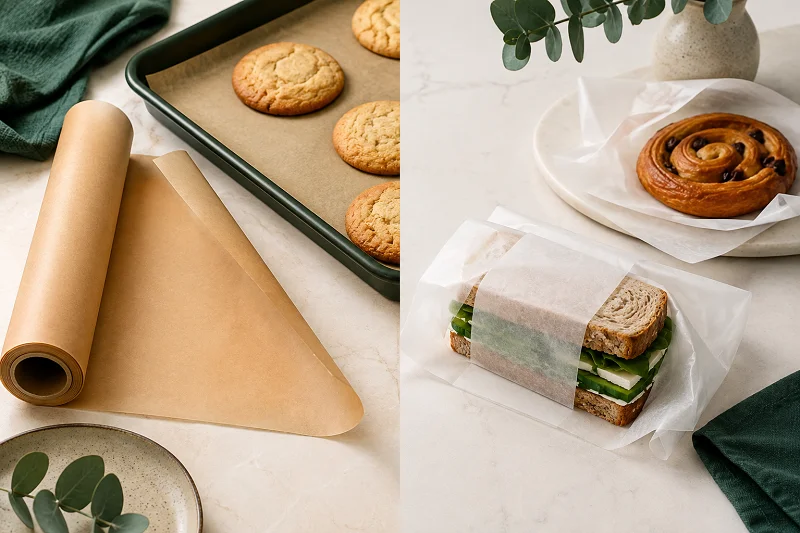
Parchment paper is a food-grade paper used for cooking and baking. Its non-stick surface helps food release cleanly while the treated paper stands up to oven heat better than ordinary wrapping paper.
Most Australian supermarkets sell it as baking paper. If an American recipe asks for parchment paper, this is generally the product you need.
You will often see brown and white rolls on the shelf. Brown parchment is unbleached while white parchment has been bleached. Either one will do the job nicely in an everyday Aussie kitchen. Colour does not show how much heat a sheet can handle so check the pack before you switch on the oven.
Why Do Bakers Use It?
Baking paper saves a fair bit of fiddling around because it stops biscuits from gripping the tray and helps cakes come away from their tins. It also keeps baked on food away from the metal which makes the washing-up easier.
- Line baking trays for biscuits and scones.
- Line cake tins and loaf pans.
- Roll pastry or sticky dough between two sheets.
- Make parcels for fish or vegetables.
- Protect trays when roasting food.
What Is Butter Paper?
Butter paper is where things get a bit murky because it is not one standard product name. A food supplier may use the term for grease-resistant wrapping paper while another seller may mean waxed paper. An art shop can use the same name for translucent sketching paper.
You cannot judge butter paper by its name or appearance alone. Read the label and look for clear instructions about food contact, oven use and maximum temperature.
If there is no packet and you are not sure what the sheet is do not cook with it. A fresh roll of baking paper costs far less than a ruined batch of biscuits or a smoky oven.
How Does Butter Paper Compare With Greaseproof Paper?
It can be, but the terms are not used consistently. Greaseproof paper is made to resist oil and fat which makes it handy for wrapping sandwiches or pastries that may leave oily marks.
It may not have the same non-stick finish as baking paper. It may also have a lower heat limit. If you plan to put it in the oven the packet needs to say that it is safe to do so.
What Sets Butter Paper Apart From Wax Paper?
Some shops use the two names for the same product. Wax paper has a thin wax coating that works well for wrapping cold food or separating items in the fridge and freezer.
Wax paper is not a substitute for baking paper in an oven. Its coating can melt and the sheet may smoke, so keep it for kitchen jobs that do not involve oven heat.
Which Paper Should You Use in the Oven?
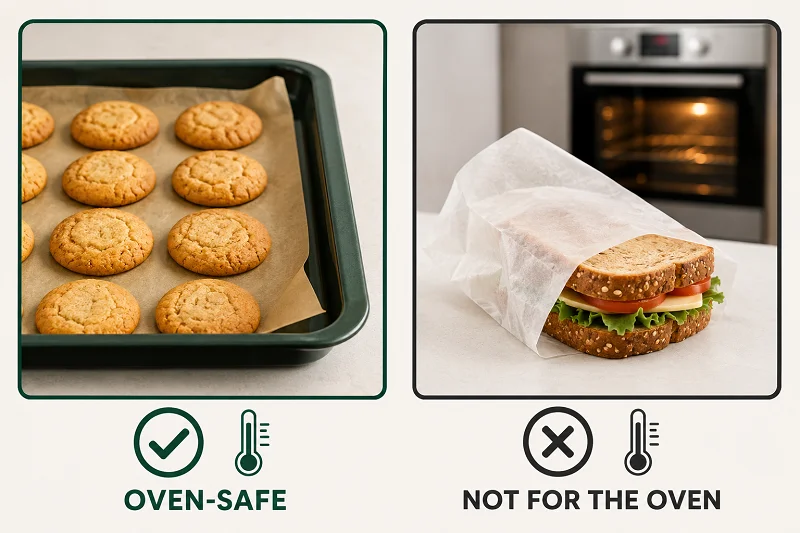
Use a roll marked baking paper or parchment paper and check the maximum temperature on the box. Australian products do not all have the same limit. Some are rated to 230°C while others are rated to 240°C so the instructions on your own roll should guide you.
Do not let the paper touch an exposed heating element or naked flame. It can still burn. Heat-resistant does not mean fireproof.
Expert tip: Cut the sheet so it sits neatly inside the tray. Large loose corners can curl up towards a heating element. In an air fryer, place food on top of the liner before turning the appliance on. This stops the fan from lifting the paper.
If your butter paper says it is oven-safe follow the directions supplied with that product. The label matters more than the nickname printed on the front and gives you a safer answer than a quick guess based on appearance.
Which Paper Works Best for Each Kitchen Job?
| Kitchen job |
Best choice |
Reason |
| Baking biscuits |
Baking or parchment paper |
It is non-stick and made for oven heat |
| Lining a cake tin |
Baking or parchment paper |
The cake is easier to remove |
| Roasting vegetables |
Baking or parchment paper |
It reduces sticking and mess |
| Wrapping a sandwich |
Food safe greaseproof or baking paper |
No oven heat is involved |
| Separating frozen food |
Paper approved for freezer use |
It helps stop pieces sticking together |
| Rolling pastry |
Baking or parchment paper |
The dough lifts away more easily |
| Cooking under a grill |
Neither, unless the maker allows it |
Paper may ignite near direct heat |
How Can You Identify the Roll in Your Cupboard?
Found an unmarked roll at the back of the drawer? Do not rely on colour or feel. Work through these checks first.
- Read the product name. Look for “baking paper” or “parchment paper”.
- Check the approved uses. The box should tell you if it suits an oven, microwave or air fryer.
- Find the heat limit. Make sure it is higher than the temperature in your recipe.
- Read the warnings. Check the advice about grills, flames and heating elements.
- Skip mystery paper. If you cannot identify it, use a fresh sheet from a labelled pack.
Does Paper Colour Affect Cooking Results?
Brown and white baking paper usually perform the same basic job when they carry a suitable non-stick treatment and heat rating. The main visible difference is the way the paper has been processed. Brown paper keeps its natural colour while white paper has been bleached for a cleaner appearance.
Your choice may come down to presentation. Brown paper can suit a rustic bakery look while white paper can provide a brighter background for cakes and pastries. Fine Packaging recommends checking performance details before colour because the coating and heat limit matter more during cooking.
Can Parchment Paper Be Used in a Microwave?
Many baking paper products can be used in a microwave but you should still read the packet first. The sheet can help cover food and reduce splatter without sealing the container as tightly as plastic film.
Keep the paper clear of any metal parts and do not use it if the manufacturer excludes microwave use. The same rule applies to butter paper. Use it only when the pack confirms that it is suitable for the appliance and for direct food contact.
Can You Reuse Baking Paper?
Sometimes a sheet may be fine for another tray of biscuits if it is still clean and strong. Let it cool before checking the surface, then throw it out if it has become dark or brittle. Torn and heavily greasy sheets should also go in the bin.
Do not reuse paper that has touched raw meat or fish. You should also follow the maker’s directions. Some products are intended for one use only.
Is Baking Paper Recyclable or Compostable?
There is no single answer for every roll because a non-stick coating or food residue can make used baking paper unsuitable for kerbside recycling. Some products are certified compostable while others need to go into general waste.
Check the box and your council’s waste guide. Do not assume brown paper belongs in the compost just because it looks natural.
The Verdict
For most Australian kitchens, baking paper is the safe and simple choice for oven use. It is the local name commonly used for parchment paper and it helps stop food from sticking when used within the directions on the pack.
Butter paper is better treated as a general label. It may be useful for wrapping food but it is not automatically safe for baking. When heat is involved trust the instructions on the packet rather than the product nickname.
Need Food Safe Paper or Custom Food Packaging?
Fine Packaging works with Australian businesses that need dependable packaging for food, retail and ecommerce products. Our team can help you compare materials and choose a custom size that suits the product inside. We can also add printed branding that gives your packaging a more professional finish.
Request a free quote from Fine Packaging and tell us what you need to pack. We offer free quotes and free shipping across Australia on eligible custom packaging orders. Email [email protected] to discuss your size, material and printing requirements with our team.
Frequently Asked Questions
Is parchment paper the same as baking paper in Australia?
Yes. In everyday Australian cooking parchment paper is generally called baking paper. Check the packet before use because heat limits can vary.
Can I use butter paper instead of parchment paper for a cake?
Only if the butter paper is clearly labelled as oven safe and suitable for baking. Do not use it if it is waxed made for wrapping or sold as art paper.
Can butter paper go in an air fryer?
Not unless the manufacturer says it can. Use a liner made for air fryers and place food on top before the appliance starts. This stops the paper from blowing into the element.
Do I need to grease parchment paper?
Usually not. Baking paper already has a non-stick surface. A recipe may still ask you to grease the tin beneath the paper so the sheet stays in place.
What can I use if I have no baking paper?
You may be able to grease the tray or tin. Some recipes also allow you to dust it with flour. A food-grade silicone baking mat can work on a flat tray. Do not put ordinary paper, paper bags or wax paper in the oven.


