

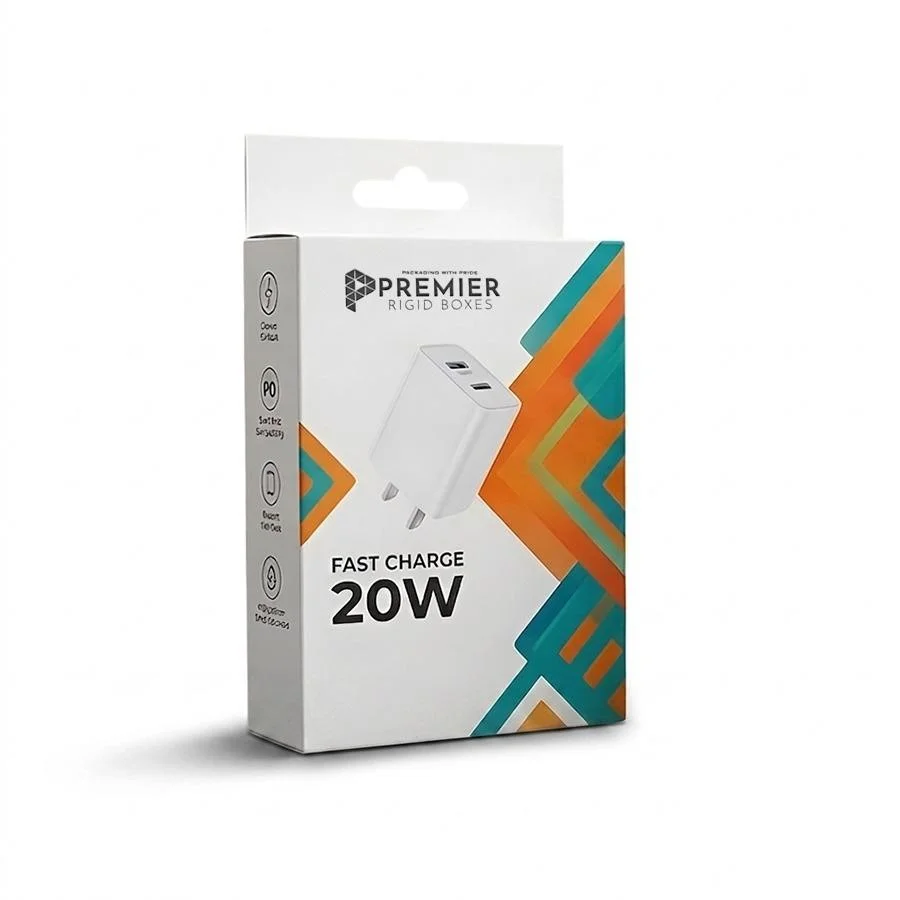
Most people who sell phone chargers spend months obsessing over wattage, certifications, and compatibility. The box the charger ships in? That gets maybe ten minutes of thought, usually right before the first production run.
That’s a mistake that keeps coming up, and it costs brands more than they realize not just in returns and damage rates, but in the much harder-to-measure cost of not standing out on a shelf or a product listing when it genuinely mattered.
This guide is for people who are past the basics. You know you need packaging. You’re now trying to figure out how to source it smartly, what questions to ask, and what’s actually changed in 2026 that affects your decisions.
Why the Charger Market Makes Packaging More Important Than It Used to Be
The global mobile phone charger market hit $24.9 billion in 2026. That number sounds reassuring until you consider what it means competitively thousands of brands selling near-identical products, often at similar price points, to buyers who make split-second decisions based on what they see first. The packaging is often what they see first.
There’s also a damage problem that doesn’t get talked about enough. Industry logistics data consistently shows that roughly one in four charger shipments arrives with some form of damage when packaging hasn’t been properly specified. That’s a 25% damage rate for businesses that treat the box as an afterthought. At scale, that bleeds margin fast not just in replacements but in reviews, returns, and lost repeat customers.
On the regulatory side, 70% of EU importers now require that product packaging be recyclable. That’s not a preference it’s a compliance issue for brands selling into European markets.
All of this means that charger boxes wholesale purchasing decisions in 2026 carry real business weight. They’re not just a line item on a production budget.
What’s Actually Changed in Wholesale Charger Packaging This Year
Sustainability has moved from optional to expected. Apple’s 2026 environmental commitments eliminated plastic from its retail packaging entirely, shifting to 100% fibre-based materials across all product lines. When a company with Apple’s market influence makes that move, it sets an expectation across the category. Buyers particularly retail buyers and B2B procurement teams are now looking at the rest of the electronics space with the same lens.
For brands sourcing charger boxes wholesale, this means specifying materials clearly and early. Recycled cardboard, molded fiber inserts, biodegradable inner packaging these aren’t premium upsells anymore. They’re increasingly table stakes for retail placement and certain wholesale partnerships.
Connected packaging is no longer experimental. The Global Connected Packaging Survey 2026 found that 81.2% of companies now use some form of connected packaging technology, up significantly from the prior year. QR codes and NFC tags used in combination have become the preferred implementation for nearly half of adopters.
For charger brands, the practical applications are straightforward authentication, setup guides, warranty registration, and linking customers into a brand ecosystem from the moment they open the box. The cost of adding a QR code to a box is minimal. The cost of not having one, in a market where unboxing content drives real purchasing decisions, is harder to calculate.
Customization MOQs have dropped. This matters enormously for smaller brands and resellers. A few years ago, getting fully custom printed packaging meant committing to runs of 5,000 or 10,000 units minimum. That’s changed. Shenzhen-based manufacturers who supply roughly 65% of global charger packaging volume have reduced minimums significantly, and OEM/ODM support for branded boxes is now accessible at scales that would have been impractical before.
What to Look for When Sourcing?
Structure first, aesthetics second. A charger box needs to protect the product. That sounds obvious, but it’s where a lot of sourcing decisions go wrong brands chase a look without verifying that the structural spec actually does its job under shipping conditions. Ask for compression test results and drop test data before approving a sample.
Check certifications against your target markets. If you’re selling into the EU, CE and RoHS compliance isn’t optional. If you’re selling into the US through major retail channels, those buyers will have their own requirements. Get specifics in writing, not just verbal assurances.
Negotiate sample orders before committing volume. This is especially important when sourcing internationally. A sample run reveals quality consistency issues, print accuracy problems, and structural weaknesses that spec sheets never show. Thermal performance under real conditions matters for charger packaging specifically products that generate heat need boxes with appropriate ventilation allowances or material choices.
Consider the full cost, not just the unit cost. A cheaper box with a higher damage rate is more expensive in practice. The math on this is simple but frequently ignored.
Branding Opportunity Most Brands Leave on the Table
One tech accessory brand redesigned the packaging for their 20W wireless chargers with a manufacturer capable of producing custom boxes with brand-specific color systems and QR codes linking to setup tutorials. Within three months, their Amazon sales volume increased by 40%. Return rates dropped by 18%. Unboxing content from customers generated organic reach that a paid campaign would have cost significantly more to produce. None of that came from changing the charger itself. It came from taking the box seriously.
That’s the argument for investing in proper wholesale packaging at scale rather than defaulting to whatever ships with the lowest unit cost. The box isn’t separate from the product experience. For most buyers, it is the first product experience and in a market this crowded, first impressions carry disproportionate weight. The brands figuring this out in 2026 are not spending dramatically more on packaging. They’re spending it more deliberately.